Monthly Archives: April 2012

How to be a Woman

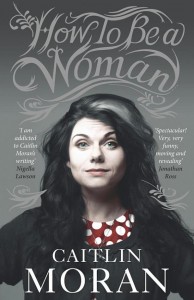
I finished reading How To Be A Woman this weekend. It’s a humourous, up-to-date book on feminism with stories from CM’s life so far. It was enjoyable, revealing and inspiring. It gave me a lot to think about. Depressingly I do happen to work in an undeniably sexist environment. But after reading the book, I did challenge some sexist comments in my workplace yesterday. My challenge was deflected using humour, so I didn’t get the satisfaction of having my point accepted, but it’s a start.

I’ve always felt ever so slightly embarrassed when I’ve seen Caitlin Moran’s stuff, either when she was on TV presenting Naked City in the Nineties or reading specific passages of her book. I’ve always been fascinated by her and her steep rise to fame because she’s my age, grew up in Wolverhampton and isn’t from a rich family. In short, she could have been one of us (I’m referring to my group of friends from school). So when she makes jokes in the book that aren’t funny or when she joked that Richey and Nicky of the Manics needed a wash on Naked City it makes me squirm a little because it’s like she’s representing all women in their mid-thirties from Wolvo. However I don’t want to sell her short and so I should point out that are several very funny moments in the book that made me laugh out loud. How To Be A Woman shows that Caitlin Moran has grown up a lot, been through a lot and is extremely clever. I have to respect her for all those things.

Most importantly, the book has inspired me to get rid of a pair of very uncomfortable shoes which I never should have purchased in the first place. I have big feet and the world needs to start dealing with it.

(17th in 2012)
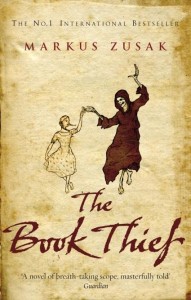
The Book Thief

I finished reading this tonight. It’s about a girl growing up in Germany during WWII and those who play a part in her life. It is narrated in a punchy style by none other than Death himself.

It was very interesting for me to learn about what life was like for Germans at that time, as I’ve wondered in the past how a nation could collectively allow such atrocities to happen. Just for the record, I know realise the Germans suffered too, maybe not in the same ways as the Jews, but things weren’t easy. They were sent to die in the war or at least were short of food and terrorised by the Nazis. At least some felt shame even at the time.

There were some parts of the book where I felt a bit impatient because nothing seemed to be happening. But I think those parts are deliberate; ordinary life is interspered with the significant events to show that the characters are human.

The Book Thief is very powerful in spite of using only simple language. I cried during the last chapters. But at other times I laughed. Sometimes my heart was warmed by the spirit shown by the characters. At other times it thudded with fear for them.

There is a lot to The Book Thief. A Guardian review decrees that everyone should read it. I’m inclined to agree but with the caveat that they read Maus as well. Maus tells a similar tale but from a Jew’s point of view. It is even more powerful than The Book Thief and is one of my favourite books of all time.

(16th in 2012)

Intermezzo from Cavalleria Rusticana

I get tired sometimes. This leads to my becoming irritable and, before too long, mildly morose. Experience has taught me to force myself to seek something to lift my soul out of the gloom, something that will instantly deliver a moment of pure happiness. Tonight that something is the beautiful, soaring Intermezzo from Cavalleria Rusticana by Mascagni. I think I’d heard it before but it first made its impact on me when I heard it in the excellent film Raging Bull.

Rebecca

From one creepy mansion to another…

I watched the film Rebecca today, having heard about the book on an episode of My Life in Books. The film draws you in and is quietly spooky. Mrs Danvers and Jack Favell are delightfully horrid characters.

The only drawback for me is the irritating manner of Mrs De Winters. She’s overly subservient to her husband and blames herself even when she’s not at fault. To top everything off she faints at a trial. In short, a woman who makes herself completely helpless without a man. Maybe this kind of behaviour was normal for women at the time but I just wanted to give her a good shake. I remember feeling the same when I first read Pride and Prejudice.

I don’t tend to watch old films but this one has convinced me that I should investigate others.

The Others

I first saw this film at the cinema about 11 years ago. I’d had a drink with friends beforehand and fell asleep during it twice so couldn’t really remember it, though I did see the end. I watched it again last night all the way through (I was sober this time!) and really liked it. The Others is atmospheric, chilling and Nicole Kidman is brilliant. It did spook me though; I didn’t sleep very well afterwards.

The Tube

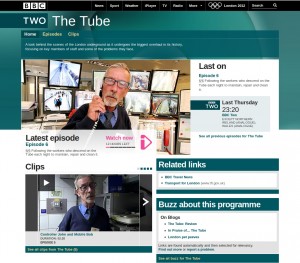
I’ve been watching The Tube on BBC2 on the recommendation of my uni friends. The programme has been fascinating. I think it’s clear to any tube user that there is a high level of organisation required but I didn’t realise quite how much goes on behind the scenes.

I don’t mind using the tube but at peak times it’s not fun. I’m always surprised at how impatient people are. Last time I was in London my ticket didn’t open the barrier so I had to turn around to go to another barrier manned by staff. The girl behind me let out the most pained sigh. She’d been delayed a maximum of 5 seconds. The programme confirms that people have this attitude. Travellers don’t care about other people, not even when someone is injured. They just want to get to where they want to go. I guess this is the downside to London’s buzz of millions of people: it’s just not possible to feel connected to each other.

The Pleasure Seekers

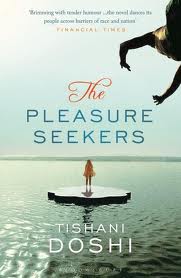
I stumbled upon this book at the library and decided to give it a go. It’s good. The book is about an Indian man who comes to England and falls in love with a Welsh girl whom he marries but the story spans both the generation before and after them. The Indian family is Gujarati, so much of the culture and language is familiar to me. The complications of a mixed marriage are obviously close to home for me too. The couple’s children, two girls, are young adults in the mid-90s, so they are about the same age as my sister and myself, but they seem to get away with all kinds of behaviour that my Gujarati community would count as scandalous and totally unacceptable. The girls’ stories stirred up in me some uneasy feelings about my own young adulthood: Should have been braver? Why didn’t I feel the kind of support from my extended family as the girls did?

Leaving my own drama aside, this book is warm and lovingly written. There are gorgeous, evocative descriptions. I relished the funny, charming colloquialisms. The book helped me to know Gujarati women again: their humour, obstinacy, wisdom, superstitiousness and boundless love.

(15th in 2012)

Saint-Saëns Organ Symphony

We went to hear The Organ Symphony (the only one as far as I’m concerned). I knew it would be wonderful but I hadn’t expected its effect on me to be so visceral.

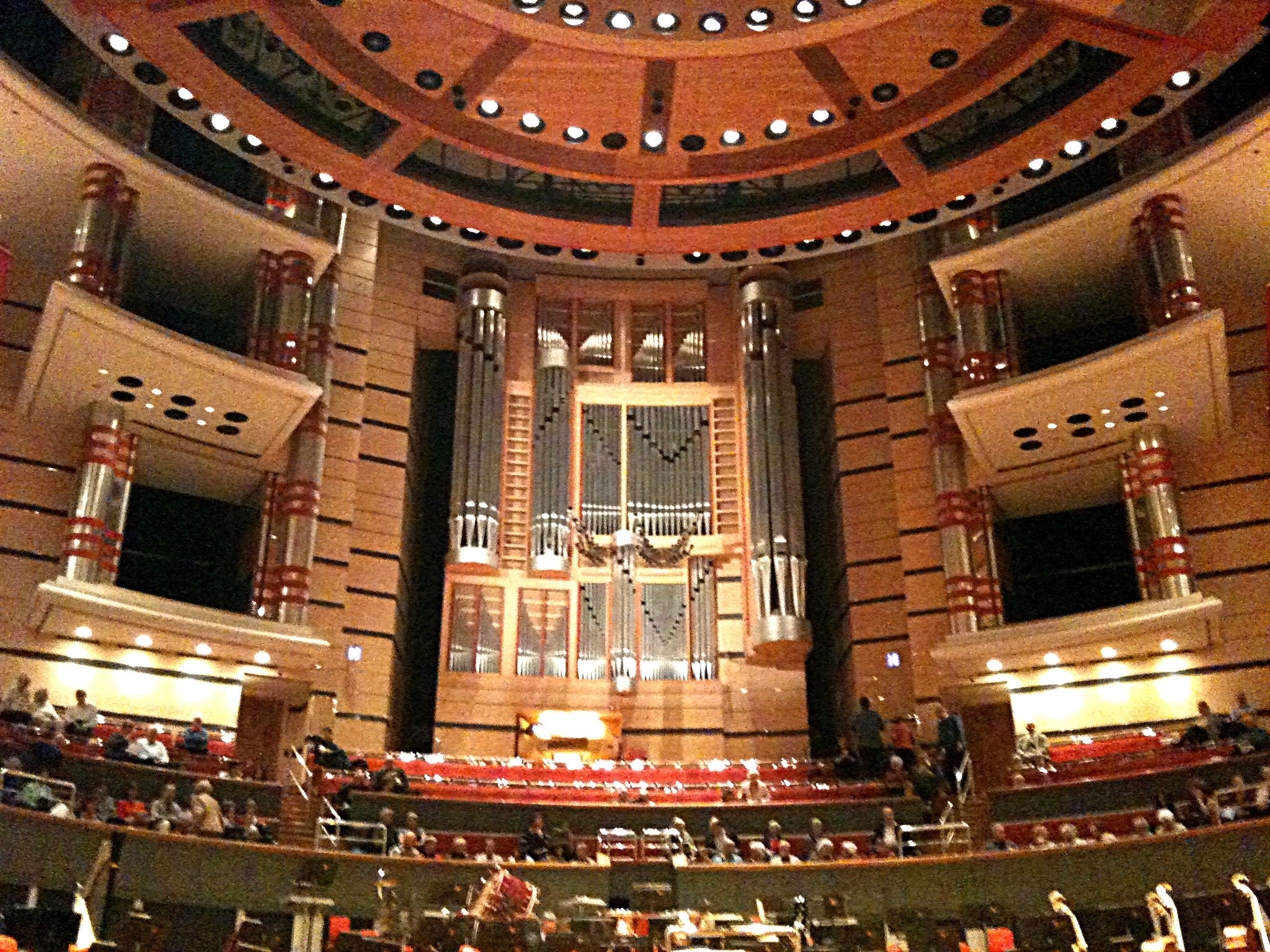
I had wanted to hear the organ at Symphony Hall for a long time. I’m not fond of the sound of the organ as a rule but I wanted to experience its power. Its part is just right in the symphony. For a start, it only appears sparingly and doesn’t overpower the orchestra however, on the rare occasion that it does take centre stage, it is suitably dramatic. The final movement of the symphony is my favourite and it brought tears to my eyes. As a bonus, and I’d never seen this before, there were two encores, the second of which was Les Toreadors from Carmen Suite No. 1. That’s in the film Babe, as is the last movement of Organ Symphony, which makes me wonder whether the first encore was also from Babe. It was certainly familiar…

I didn’t take my camera so I snapped the organ on my iphone as a memento: