Category Archives: books

How to Cook Without Recipes

I borrowed this book from the library. I haven’t read it from cover to cover as it’s more of a reference book. I have however read enough to like it enough to add it to my Amazon wishlist. It contains invaluable information for the enthusiastic cook, such as the difference between taste and flavour and how to create ‘flavour trails’ to successfully create your own recipes. There is an excellent chapter on cooking methods. It’s the kind of knowledge I wish I’d had years ago e.g.to mop up liquid fat sitting on top of a stew that is to be served straight after cooking place a piece of kitchen roll carefully over the surface.

It’s not all good – there is an unnecessary chapter towards the end dedicated to the author’s opinions on celebrity chefs – but even there Glynn Christian is trying to guide you towards being a better and more creative cook. That comes through from beginning to end: he sincerely wants the reader to make the best food that they possibly can according to their own preferences.

One Day

I just finished reading this and I loved it. It was easy to identify with, because 1) it’s of my time and 2) I am also a female geeky sort. DN has got the balance just right: romantic without being too mushy, cockiness muted by self-doubt, elation and misery in equal parts. I feel like I’ve lived the twenty years with Dexter and Emma; I’m now older and wiser. Wonderful book.

David Nicholls talks to the Guardian book club about One Day.

(14th in 2012)

Whatever You Love

This book was part of a display at the local library. My eye was drawn by the ‘Costa Book Awards, Shortlist 2010’ sticker on the front of it so I thought I’d give it a try.

It was easy read and I got through it very quickly. It’s a story about a woman who loses a child and the blurb on the back promises that she takes revenge. Well, the revenge was a complete anti-climax. There was also an unrealistic sub-plot with anonymous letters. I felt that the whole book lacked a certain depth, as if the tale was told in a hurry. I couldn’t relate to or sympathise with any of the characters. There’s a recommendation on the front from the Observer: ‘ A brilliant and brutal novel that continues to unsettle long after the final page has been turned.’ But that is the complete opposite of what I feel on completing the book; I’ve almost forgotten about it already. Maybe I’d relate more if I had children. But isn’t that the author’s job, to take me into a different world?

Having said all that, the depiction of grief is very good: truthful and convincing. This book had a lot of potential but, for me, it didn’t live up to it.

(13th in 2012)

We Need To Talk About Kevin

Two days ago it was Mothers’ Day. I was halfway through We Need To Talk About Kevin. While friends posted happily on Facebook about their special day celebrating the unique love between a mother and her children, my mind was full of the ‘worst case scenario’.

I had been warned by someone that the book was mostly boring until the end when it was horrific. Someone else told me that that the book was hard work until the last third. But, only halfway through on Sunday, I was affected enough to have a nightmare that night influenced by what I’d read so far.

‘Kevin’ is one of the best books I’ve read. With the exception of the mentions of American politics, I didn’t find it hard work. It’s powerful, disturbing and convincing. Although it’s extreme, I’m grateful that someone has written about motherhood without censoring the unpleasant parts. I get tired of the flawless depictions of motherhood in society and the media. This book is a breath of fresh air.

To try to answer the book’s central question of who was to blame: I think that the problems started because Eva was not willing to deal with a difficult child by putting that child before herself. Yes, Kevin was unpleasant but as a potential parent you have to be prepared to deal with that. (But it’s easy for me to say that since I’m not a parent.) The interactions between Eva and Kevin became a hideous game rather than a mother bringing up her son. I don’t think that that absolves Kevin of all responsibilty for his actions though- even if you’re not as bright as he is, at fifteen you must know, no matter how awful your mother is, that it is wrong to kill.

The most chilling aspect of the book is that Eva is so intelligent and articulate, charming even, but her actions are manipulative and selfish. Kevin takes after his mother, so which of them is the monster?

Lionel Shriver talked about the book for the Guardian book club when ‘Kevin’ was the book of the month.

(12th in 2012)

Case Histories

I read this book twice; as soon as I reached the end I started it again. The story flits between past and present and is narrated by different characters. Sometimes the same segment of the story is told by different characters. On the first reading I was kept wondering what the connections are between the past and the present. On the second reading, knowing how things turn out, it was delicious to discover all the clues left by the author en route. There is so much stuffed into this book: memories, happenings in the present and loads of characters. An added bonus is that the book is set in Cambridge and the area surrounding it; most of the places mentioned are familiar to me.

This is the first Kate Atkinson novel that I’ve read. I was impressed at how well the characters, particularly the females, are written. They all seem so real, possibly with the exception of Julia who is completely OTT. They are of all ages and temperaments and I was glad to read a book about women and it is definitely a book about women, in spite of the main character being male. I loved KA’s liberal use of echoes between different characters, which adds further connections between the interweaving plot strands. A few examples: Baking and knitting are done by both Michelle and Josie (after she took up with David). Brodie and Caroline independently don’t believe in ‘The One’ and think even if such a person existed they might never find them. Rosemary and Theo both have a favourite among their children.

So this book certainly held my attention, right through till the end. However, as a mystery, I don’t think it’s as good as some of the others I’ve read and loved, e.g. Gentlemen and Players by Joanne Harris and even The Behaviour of Moths by Poppy Adams. Case Histories isn’t particularly atmospheric so I wasn’t able to get completely lost in it, though I think it will lend itself well to the TV adaptation, which I look forward to watching. The only other downside was that I wasn’t satisfied with the conclusion to two of the three cases. One seemed highly improbable, the other seemed like a a bit of a cop out. Apart from that, a decent read and I hope to watch the programme if it’s repeated.

(11th in 2012)

The Death of Bunny Munro

This is a deeply unpleasant story. It’s about an alcoholic, drug-addled sex maniac. His sexual encounters and his neglect of his son after his wife’s suicide are simply awful. But there is something compulsive about the writing that kept me turning the pages and completing the book in a weekend. Cave takes the reader on a horrfic, unreal rollercoaster ride. The slow bits are those narrated by Bunny’s son and they are touching and heartbreaking. The book reminded me of Irvine Welsh’s Filth: a depraved journey in which, to the relief of the reader, the protagonist finally gets what he deserves.

The book has its own website and the Guardian interviewed Cave about the audiobook version to which he wrote a soundtrack. The audiobook sounds very interesting but, for now at least, I think I’d like to leave Bunny for something a little less horrible.

(10th in 2012)

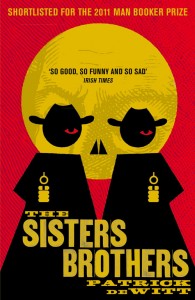
The Sisters Brothers

I finished reading this book while sitting at the bar last night. Like Cold Mountain, The Sisters Brothers is set in America in the 1800s, only a little earlier (1851) so it seems natural to compare the two books. The Sisters Brothers is also something of an odyssey with lessons learned along the way but on a much smaller scale than in Cold Mountain. The mood is lighter too. Not that there aren’t some humourous moments in Cold Mountain, but there is less continual hardship and hunger in The Sisters Brothers.

This book is very easy to read. The story is fast-paced and swept me along with it. There are a few wonderful, thought-provoking passages which slowed me down a little. I think Cold Mountain trumps it in terms of scale and atmosphere but The Sisters Brothers is just as satisfactory a tale.

(9th in 2012)

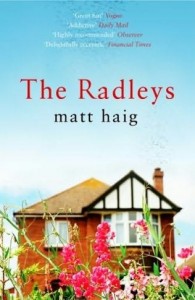
The Radleys

I picked this up in the library because I had seen it reviewed on The TV Book Club. It is very easy to read and the references to modern middle class life are quite funny. But, although it passed the time, I can’t recommend this as a good read. Apart from all the mentions of blood it feels like it’s written for children, albeit older ones. It’s unconvincing somehow. Seems silly to be saying that since it’s about vampires, but The Time Traveller’s Wife is convincing and time travel is a fantasy too.

EDIT: Just found out it is in fact for teenagers from the Guardian’s review.

(8th in 2012)

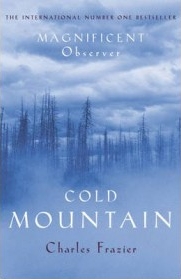
Cold Mountain

This book starts off unpromisingly. I went back to the beginning a few times because I kept losing interest during the first chapter, abandoning the attempt then forgetting what I’d read when I picked it up to try again. But after the first couple of chapters the protagonist starts to have interesting adventures which held my attention.

It also took me some time to get used to the language which is of the time the book is set in: 1865. Although I had to look up many words at first, I remembered their meanings when they appeared again. Then my reading flowed and I was transported back in time. It was so enjoyable that I wouldn’t mind reading it again. It’s a story of adventure, friendship, hardship, love and nature. It is something of an epic.

There is a lot more to the book than the language and the plot. There are recurring themes, symbolism and so on but I didn’t look into those aspects in much detail this time around. The Guardian book club examined the book and there are some good notes on the novel here.

(7th in 2012)

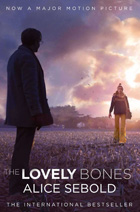
The Lovely Bones

I’ve just finished reading this. I’d already watched the film, so I knew how the story was going to end, but I still enjoyed it purely because it is so easy to read. I didn’t think it lived up to the hype though. For a start I don’t think it’s very well written. Considering the material it covers, the book seems very benign. It’s a good story though and I like Sebold’s very original (as far as I can tell) idea of having the narrator tell the story after her death.

It’s rare but in this case I have to conclude that the film is better than the book, though I can’t say for certain that I would maintain that position had I read the book before I’d seen the film. Of course the film simplifies and accelerates the book, as films have to, but still I found Peter Jackson’s adaptation to be visually breathtaking and the suspense was masterful.

(6th in 2012)