Category Archives: books

What Was Lost

This is the first book I’ve read with my reading group. I liked it a lot. It is very spooky and feels very close to home which I find to be a good combination. It’s written by someone very close to my age who grew up in the Midlands so I understood all her cultural references. Not only that but the shopping centre featured is based on the Merry Hill centre. I couldn’t find much to criticize in this at all. It’s a multi-faceted book, with both hilarious and poignant moments. It has a cracking mystery running through it and contains a thoughtful depiction of modern life.

(22nd in 2012)

On Chesil Beach

I must admit that this wasn’t next on my ‘To Read’ list but I’d been investigating holidays on the Dorset coast and that brought the title to mind.

The front promises that it is ‘devastating’ which seemed a little dramatic for a book only 160 pages long. I wouldn’t say it is devastating but it did affect me. Ian McEwan is excellent at describing exactly what goes on inside his characters’ heads; I felt that I completely understood them. I love his precise prose. I didn’t enjoy every part of the book though, in fact I thought it sagged a little in the middle, but it perked up again towards the end. The finish itself was wonderfully poignant. It reminded me of one of the reasons why I love my husband: he would never have made the mistake that Edward made with Florence on Chesil Beach.

(21st in 2012)

Curry night

Mr W has declared that he is always happy to eat curry so this weekend I made monkfish moilee with vegetable pilau using recipes in Gordon Ramsay’s Great Escape. Both turned out well, except I marinaded the fish in lime juice for too long which made it a little bit too dry around the outside. Next time I won’t marinade in lime juice; I’ll add it to the sauce instead. Also the fish curry had too much chilli in it!

Serves 4

Ingredients:
500g skinless and boneless Monkfish tails
¼ tsp Ground Turmeric
½ tsp Sea Salt
Juice of 1 Lime
2 tbsp Vegetable Oil
1 Large Onion, peeled and finely chopped
3cm Ginger, peeled and finely grated
3 Garlic Cloves, peeled and finely crushed
3 Green Chillies, deseeded and sliced in half lengthways
4 Curry Leaves
400ml tin Coconut Milk
6 Cherry Tomatoes, quartered
Coriander leaves to garnish

1. Cut the monkfish tails into bite sized chunks and place in a bowl.

2. Mix together the turmeric, salt and lime juice to create a wet paste, then mix this with the monkfish chunks and leave to marinate for about 20 minutes.

3. Heat the oil in a large pan over a medium to high heat.

4. Add the onion, ginger, garlic, chillies, curry leaves and salt. Stir frequently for 5-6 minutes until the onion is translucent and soft.

5. Pour in the coconut milk and bring to a gentle simmer, stirring occasionally.

6. Add the marinated fish and cherry tomatoes and gently simmer for another 4-5 minutes until the fish is cooked through.

To serve, ladle the curry into a warm bowl and garnish with coriander leaves. Serve with plain rice.

A Beginner’s Guide to Acting English

I read almost all of this book in a single day. It is wonderfully easy to read. Written by a woman only three years older than I am, the book took me back to parts of my own childhood (Indians aren’t so different to Iranians in terms of cultural attitudes). I’m very impressed at how good Shappi’s memory is. She describes childhood episodes so honestly and in such detail that they really were a delight to read. I loved the stories of the older members of her extended family too. A welcome bonus was learning a little about Iran and its people. The book is very enjoyable indeed.

(20th in 2012)

Nights at the Circus

I read this book because it was recommended by Sue Perkins when she was a guest on My Life in Books. It’s the story of Sophie Fevvers, a trapeze artist who is part woman, part swan and Jack Walser, a journalist on a quest to discover the truth behind her identity. It is set at the turn of the century and the book’s three parts take place in London, St Petersburg and Siberia respectively.

Before I started it I wasn’t aware that ‘Nights’ is a work of magic realism so I found the first part of the book confusing and off-kilter, so much so that I had to start again from the beginning. The other aspect of this book that made it hard work is the enormous number of words whose meanings I had to look up. I think it was more than one word per page on average and at 350 pages long, this made the experience feel very disjointed.

However there was plenty that I enjoyed in this book. Actually, the word plenty is apt as the book is simply bursting at the seams with things for me to ponder. It’s filled with colourful charcacters. There are numerous metaphors, most of which I haven’t yet untangled. An abundance of mini fairy stories sewn into the main plot which delight and disgust in equal measures. The joke at the end was hilarious. But as well as humour the book has important things to say. These are my favourite quotes:

“What is marriage but prostitution to one man instead of many?”

“Wherein does a woman’s honour reside, old chap? In her vagina or in her spirit?”

Overall, Nights at the Circus is fascinating and wondrous but I did find it a bit of a slog. It’s a book that needs to be studied. The fantasy element does provide some escapism but it doesn’t do the book justice to ignore all its other aspects.

(19th in 2012)

The Book of Lies

I finished reading this book tonight. It is set in Guernsey and goes back and forth between two connected stories, one narrated by a teenage girl in the 80s, the other tells the story of the generation before her during the German occupation. It’s worth watching this video of the author talking about the book, not least for the scenes of Guernsey to spark the imagination:

I didn’t know a thing about Guernsey until I read this book so it was fascinating to discover what had happened there during WWII. The teenage narrator’s voice was so realistic that I found myself cringing as it brought back moments from my own teenage years. The story of the girl’s family during the Occupation seemed a bit cloudy to me at first and not nearly as engaging as the teenager’s story, however all became clear towards the end. The conclusions of both stories were satisfying to me and I liked the slightly menacing tone at the finish.

On the other hand my enjoyment was muted for a number of reasons. Firstly, both threads took a long time to build up any kind of pace. I wasn’t even properly engaged until over halfway though. Secondly, the story set during the Occupation was peppered with patois (based on French) that I mostly didn’t understand. Thirdly there were footnotes all over the place and with the book already flitting between two stories the footnotes made it feel even more disjointed.

I’m glad I read The Book of Lies as I learned a something about Guernsey but I can’t say the book has left it’s mark much beyond that.

(18th in 2012)

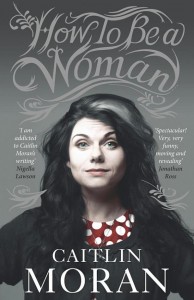
How to be a Woman

I finished reading How To Be A Woman this weekend. It’s a humourous, up-to-date book on feminism with stories from CM’s life so far. It was enjoyable, revealing and inspiring. It gave me a lot to think about. Depressingly I do happen to work in an undeniably sexist environment. But after reading the book, I did challenge some sexist comments in my workplace yesterday. My challenge was deflected using humour, so I didn’t get the satisfaction of having my point accepted, but it’s a start.

I’ve always felt ever so slightly embarrassed when I’ve seen Caitlin Moran’s stuff, either when she was on TV presenting Naked City in the Nineties or reading specific passages of her book. I’ve always been fascinated by her and her steep rise to fame because she’s my age, grew up in Wolverhampton and isn’t from a rich family. In short, she could have been one of us (I’m referring to my group of friends from school). So when she makes jokes in the book that aren’t funny or when she joked that Richey and Nicky of the Manics needed a wash on Naked City it makes me squirm a little because it’s like she’s representing all women in their mid-thirties from Wolvo. However I don’t want to sell her short and so I should point out that are several very funny moments in the book that made me laugh out loud. How To Be A Woman shows that Caitlin Moran has grown up a lot, been through a lot and is extremely clever. I have to respect her for all those things.

Most importantly, the book has inspired me to get rid of a pair of very uncomfortable shoes which I never should have purchased in the first place. I have big feet and the world needs to start dealing with it.

(17th in 2012)
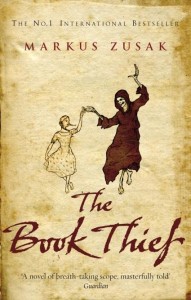
The Book Thief

I finished reading this tonight. It’s about a girl growing up in Germany during WWII and those who play a part in her life. It is narrated in a punchy style by none other than Death himself.

It was very interesting for me to learn about what life was like for Germans at that time, as I’ve wondered in the past how a nation could collectively allow such atrocities to happen. Just for the record, I know realise the Germans suffered too, maybe not in the same ways as the Jews, but things weren’t easy. They were sent to die in the war or at least were short of food and terrorised by the Nazis. At least some felt shame even at the time.

There were some parts of the book where I felt a bit impatient because nothing seemed to be happening. But I think those parts are deliberate; ordinary life is interspered with the significant events to show that the characters are human.

The Book Thief is very powerful in spite of using only simple language. I cried during the last chapters. But at other times I laughed. Sometimes my heart was warmed by the spirit shown by the characters. At other times it thudded with fear for them.

There is a lot to The Book Thief. A Guardian review decrees that everyone should read it. I’m inclined to agree but with the caveat that they read Maus as well. Maus tells a similar tale but from a Jew’s point of view. It is even more powerful than The Book Thief and is one of my favourite books of all time.

(16th in 2012)

The Pleasure Seekers

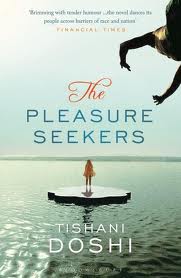
I stumbled upon this book at the library and decided to give it a go. It’s good. The book is about an Indian man who comes to England and falls in love with a Welsh girl whom he marries but the story spans both the generation before and after them. The Indian family is Gujarati, so much of the culture and language is familiar to me. The complications of a mixed marriage are obviously close to home for me too. The couple’s children, two girls, are young adults in the mid-90s, so they are about the same age as my sister and myself, but they seem to get away with all kinds of behaviour that my Gujarati community would count as scandalous and totally unacceptable. The girls’ stories stirred up in me some uneasy feelings about my own young adulthood: Should have been braver? Why didn’t I feel the kind of support from my extended family as the girls did?

Leaving my own drama aside, this book is warm and lovingly written. There are gorgeous, evocative descriptions. I relished the funny, charming colloquialisms. The book helped me to know Gujarati women again: their humour, obstinacy, wisdom, superstitiousness and boundless love.

(15th in 2012)