Category Archives: books

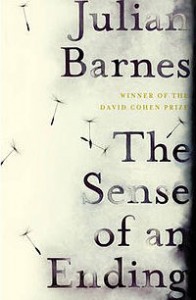
The Sense of an Ending

This is a very well written book. Lucid and wonderfully perceptive, Barnes’ writing reminds me of McEwan’s.

The theme of the book is memory and how it creates a version of the past that doesn’t match up with other people’s versions or even one’s own version from a different time. That’s before ‘The Truth’ even comes into consideration. The blurb calls it ‘the story of one man coming to terms with the mutable past’.

I found the ending a little odd because some details are missing, leaving the reader to fill in the gaps using their imagination. At first I thought I had missed something but I found discussions about the conclusion on online forums expressing similar opinions to mine. However, I can forgive that since the book is a very good read; I was completely absorbed in the narrator’s journeys through his memories. The book strikes several nerves with me: I am painfully aware that I attempt to rewrite my own history (I suppose to try to save face) and I am always producing justifications for my illogical actions. Perhaps one day I will train myself to be more logical, like Mark is. In the meantime I will be very careful about what I say in all my written communications…

This is my favourite passage:
[Adrian] had a better mind and a more rigorous temperament than me; he thought logically, and then acted on the conclusion of logical thought. Whereas most of us, I suspect, do the opposite: we make an instinctive decision, then build up an infrastructure of reasoning to justify it. And call the rest common sense.

Of course it’s deliberate but reading through some bits of the book again, they are chillingly prophetic. This is one of Adrian’s speeches in a History lesson:

‘Indeed, isn’t the whole business of ascribing responsibility a kind of cop-out? We want to blame an individual so that everyone else is exculpated. Or we blame a historical process as a way of exonerating individuals. Or it’s all anarachic chaos, with the same consequence. It seems to me that there is – was – a chain of individual responsibilities, all of which were necessary, but not so long a chain that everybody can simply blame everyone else. But, of course, my desire to ascribe responsibility might be more a reflection of my own cast of mind than a fair analysis of what happened. That’s one of the central problems of history, isn’t it, sir? The question of subjective versus objective interpretation, the fact that we need to now the history of the historian in order to understand the version that is being put in front of us.’

(26th in 2012)
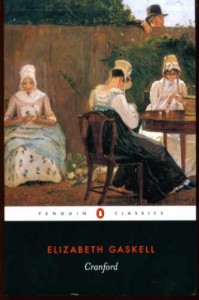
Cranford

This was my reading group’s book of the month. Again, it’s not one I would have chosen to read myself but that’s one of the reasons I joined a group: to discover new writing.

I found Cranford quite difficult to read; the construction of sentences and vocabulary used are very unfamiliar to me. I also found the first chapter – Our Society – very annoying. All the silly rules they live by and the way everyone colludes to keep up appearances.

As I got used to the style of the writing I was more able to appreciate the humour and poignant moments in the book: the cat swallowing the lace that was soaked in milk, the cow dressed in flannel and Martha nudging a guest when he took too long to help himself to potatoes and the card game where they didn’t want to wake the snoozing Mrs Jamieson but at the same time endeavoured to accommodate Mrs Forrester’s deafness. The funniest was when Lady Glenmire gets engaged while Mrs Jamieson is away: ‘The person whom she had left in charge of her house to keep off followers from her maids to set up a follower of her own!’

There are sad times: the death of Peter’s mother, the death of Miss Deborah Jenkyns. I felt for Miss Matty when she starts to wear a widow’s hood after the death of Mr Holbrook. She is forced to face the loss of her youth, the missed chances of married life and children but she puts a brave face on it, saying how lucky she is to have such good friends.

It is touching that, in the end, friendships do prevail. When Miss Matty become bankrupt her friends club together to anonymously help her financially, when Miss Jessie Brown wants to follow her father’s corpse to the grave, Miss Deborah Jenkyns accompanies her even though women didn’t usually attend funerals ‘in polite society’.

I watched a couple of episodes of the BBC dramatisation of Cranford when I was halfway through the book. It brought the book alive for me. I don’t think I’d have enjoyed the remainder of the book as much if I hadn’t seen the characters and places brought to life on screen; I needed it to fire up my imagination.

Note: If you’re going to read this book for the first time I would recommend the version that the above photo links to (rather than the free Kindle version) as it contains notes, a glossary and interesting appendices.

(25th in 2012)

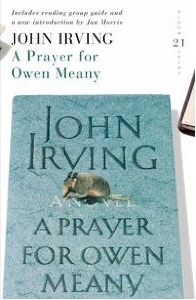
A Prayer for Owen Meany

I must admit that periodically felt disengaged from this book because I was unfamiliar with many important issues it covered. I don’t know much about the Vietnam War or American politics. I didn’t know the difference between different Christian denominations. I’m not interested in religion and I have to admit to regarding a belief in God as a weakness.

In contrast to the ‘heavy’ stuff there are some very funny scenes in the book which made me guffaw. There are poignant times too; Owen genuinely moved me. He was such a good friend to Johnny. Like me, he is tiny but very serious. Unlike me, he has the power to manipulate. I couldn’t find much likeable about the narrator but I did identify with Johnny’s indecision and metaphorical impotence. I thought that the development of characters and their relationships through the years are very well done. The unsolved mysteries kept me interested and reading on even when it felt like hard work. Towards the beginning especially I became frustrated by events and ranting that didn’t seem to be of any significance.

There were some nuggets of wisdom in the book, including my favourite: ‘IF YOU@RE LUCKY ENOUGH TO FIND A WAY OF LIFE YOU LOVE, YOU HAVE TO FIND THE COURAGE TO LIVE IT.’

The ending is truly magnificent. It’s definitely worth keeping going through the 600-odd pages to reach it. I sobbed as Owen’s fate unfolded. Much that is unexplained earlier finally falls into place. The revealed significances are like a tidal wave.

After I’d finished the book I knew there was more to it that I’d taken in on the first reading. I found some excellent chapter summaries and analysis on the SparkNotes website.

(24th in 2012)

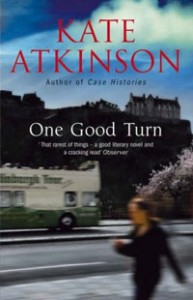
One Good Turn

This is a decent read, addictive as claimed on the jacket, and kept me guessing. Unlike how I felt about Case Histories (the first book in the Jackson Brodie series) I was satisfied with how all the endings were tied up. I felt that some parts of the plot were a little cliched though, the prime example of which was the powerful businessman employing a dominatrix. But I do love how KA brings her characters to life by devoting long passages to their thoughts which I get lost in. I think that’s the best aspect of her writing. A special mention has to go to the bit where someone has to explain to his brother that there has been mix-up and he is not dead as previously reported. I cried with laughter. Twice.

The TV series of the Jackson Brodie novels is called Case Histories and is currently being shown on BBC HD. I thought I would read the books before watching their dramatisations. The books Case Histories, One Good Turn and When Will There Be Good News? have each been made into two part dramatisations. I thought the Case Histories episodes looked good (pretty scenes of Edinburgh, good looking cast and mostly decent casting) but the translation to screen didn’t work for me; it all felt very disjointed. I watched only the second part of One Good Turn (annoyingly I mistakenly deleted the recording of the first part) and felt the same. I’m now debating whether I should try watching When Will There Be Good News? before reading the book, to see whether I’ll enjoy the programmes more if I don’t know anything about the plot beforehand.

(23rd in 2012)

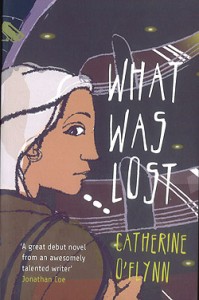
What Was Lost

This is the first book I’ve read with my reading group. I liked it a lot. It is very spooky and feels very close to home which I find to be a good combination. It’s written by someone very close to my age who grew up in the Midlands so I understood all her cultural references. Not only that but the shopping centre featured is based on the Merry Hill centre. I couldn’t find much to criticize in this at all. It’s a multi-faceted book, with both hilarious and poignant moments. It has a cracking mystery running through it and contains a thoughtful depiction of modern life.

(22nd in 2012)

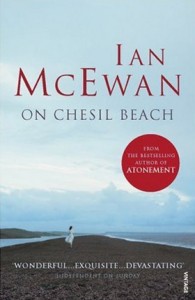
On Chesil Beach

I must admit that this wasn’t next on my ‘To Read’ list but I’d been investigating holidays on the Dorset coast and that brought the title to mind.

The front promises that it is ‘devastating’ which seemed a little dramatic for a book only 160 pages long. I wouldn’t say it is devastating but it did affect me. Ian McEwan is excellent at describing exactly what goes on inside his characters’ heads; I felt that I completely understood them. I love his precise prose. I didn’t enjoy every part of the book though, in fact I thought it sagged a little in the middle, but it perked up again towards the end. The finish itself was wonderfully poignant. It reminded me of one of the reasons why I love my husband: he would never have made the mistake that Edward made with Florence on Chesil Beach.

(21st in 2012)

Curry night

Mr W has declared that he is always happy to eat curry so this weekend I made monkfish moilee with vegetable pilau using recipes in Gordon Ramsay’s Great Escape. Both turned out well, except I marinaded the fish in lime juice for too long which made it a little bit too dry around the outside. Next time I won’t marinade in lime juice; I’ll add it to the sauce instead. Also the fish curry had too much chilli in it!

Serves 4

Ingredients:
500g skinless and boneless Monkfish tails
¼ tsp Ground Turmeric
½ tsp Sea Salt
Juice of 1 Lime
2 tbsp Vegetable Oil
1 Large Onion, peeled and finely chopped
3cm Ginger, peeled and finely grated
3 Garlic Cloves, peeled and finely crushed
3 Green Chillies, deseeded and sliced in half lengthways
4 Curry Leaves
400ml tin Coconut Milk
6 Cherry Tomatoes, quartered
Coriander leaves to garnish

1. Cut the monkfish tails into bite sized chunks and place in a bowl.

2. Mix together the turmeric, salt and lime juice to create a wet paste, then mix this with the monkfish chunks and leave to marinate for about 20 minutes.

3. Heat the oil in a large pan over a medium to high heat.

4. Add the onion, ginger, garlic, chillies, curry leaves and salt. Stir frequently for 5-6 minutes until the onion is translucent and soft.

5. Pour in the coconut milk and bring to a gentle simmer, stirring occasionally.

6. Add the marinated fish and cherry tomatoes and gently simmer for another 4-5 minutes until the fish is cooked through.

To serve, ladle the curry into a warm bowl and garnish with coriander leaves. Serve with plain rice.

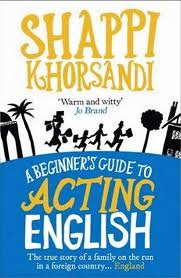
A Beginner’s Guide to Acting English

I read almost all of this book in a single day. It is wonderfully easy to read. Written by a woman only three years older than I am, the book took me back to parts of my own childhood (Indians aren’t so different to Iranians in terms of cultural attitudes). I’m very impressed at how good Shappi’s memory is. She describes childhood episodes so honestly and in such detail that they really were a delight to read. I loved the stories of the older members of her extended family too. A welcome bonus was learning a little about Iran and its people. The book is very enjoyable indeed.

(20th in 2012)

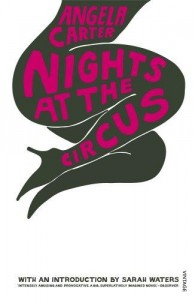
Nights at the Circus

I read this book because it was recommended by Sue Perkins when she was a guest on My Life in Books. It’s the story of Sophie Fevvers, a trapeze artist who is part woman, part swan and Jack Walser, a journalist on a quest to discover the truth behind her identity. It is set at the turn of the century and the book’s three parts take place in London, St Petersburg and Siberia respectively.

Before I started it I wasn’t aware that ‘Nights’ is a work of magic realism so I found the first part of the book confusing and off-kilter, so much so that I had to start again from the beginning. The other aspect of this book that made it hard work is the enormous number of words whose meanings I had to look up. I think it was more than one word per page on average and at 350 pages long, this made the experience feel very disjointed.

However there was plenty that I enjoyed in this book. Actually, the word plenty is apt as the book is simply bursting at the seams with things for me to ponder. It’s filled with colourful charcacters. There are numerous metaphors, most of which I haven’t yet untangled. An abundance of mini fairy stories sewn into the main plot which delight and disgust in equal measures. The joke at the end was hilarious. But as well as humour the book has important things to say. These are my favourite quotes:

“What is marriage but prostitution to one man instead of many?”

“Wherein does a woman’s honour reside, old chap? In her vagina or in her spirit?”

Overall, Nights at the Circus is fascinating and wondrous but I did find it a bit of a slog. It’s a book that needs to be studied. The fantasy element does provide some escapism but it doesn’t do the book justice to ignore all its other aspects.

(19th in 2012)

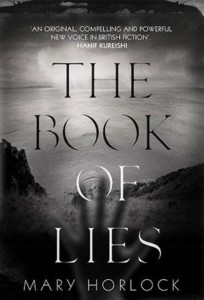
The Book of Lies

I finished reading this book tonight. It is set in Guernsey and goes back and forth between two connected stories, one narrated by a teenage girl in the 80s, the other tells the story of the generation before her during the German occupation. It’s worth watching this video of the author talking about the book, not least for the scenes of Guernsey to spark the imagination:

I didn’t know a thing about Guernsey until I read this book so it was fascinating to discover what had happened there during WWII. The teenage narrator’s voice was so realistic that I found myself cringing as it brought back moments from my own teenage years. The story of the girl’s family during the Occupation seemed a bit cloudy to me at first and not nearly as engaging as the teenager’s story, however all became clear towards the end. The conclusions of both stories were satisfying to me and I liked the slightly menacing tone at the finish.

On the other hand my enjoyment was muted for a number of reasons. Firstly, both threads took a long time to build up any kind of pace. I wasn’t even properly engaged until over halfway though. Secondly, the story set during the Occupation was peppered with patois (based on French) that I mostly didn’t understand. Thirdly there were footnotes all over the place and with the book already flitting between two stories the footnotes made it feel even more disjointed.

I’m glad I read The Book of Lies as I learned a something about Guernsey but I can’t say the book has left it’s mark much beyond that.

(18th in 2012)